
Mental health-related sickness absences finally started to decrease - Terveystalo commits to an ambitious target for 2025
In Finland, it is estimated that up to 7 million working days are lost each year due to mental health-related sick leave. Not only can mental health challenges, if chronic, lead to unnecessary premature exclusion from working life, but the situation is also unsustainable for Finland's vitality and national economy. Recent data from Terveystalo show that timely and appropriate interventions have reduced the duration of mental health-related absenteeism and brought it down for the first time in a decade. This significant turnaround gives hope that the mental health crisis can be prevented, but it will require a concerted effort by all concerned.

Terveystalo´s data shows that the total number of mental health-related absences of occupational health clients has remained relatively stable throughout the 2020s.
– Through timely and appropriate interventions, we have succeeded year on year in reducing the duration of sickness absence for our occupational health clients and shifting the focus from long to short absences. During 2024, we finally reached a situation where the relative total number of mental health-related absences of our occupational health customers turned down for the first time," says Silja Komulainen, Chief Medical Officer of Occupational Health at Terveystalo.
Mental health-related sickness absence in Finland has been on the rise for several years so far, so although this is a 1% change from 2023 to 2024, the result marks a significant turning point.
– According to the WHO, the mental health crisis is becoming the next pandemic. Our recent findings show that we have a chance of avoiding a pandemic, but it will require action on mental wellbeing by all. In healthcare alone, we cannot solve the problem, as mental health challenges are increasingly common and the strain stems from work, home and a combination of both. At Terveystalo, we want to further accelerate the pace of decline in mental health-related absenteeism and are committed to achieving a 5% reduction in national mental health-related sickness absence in our current customer base by 2025. If we succeed, we will achieve around 80 000 healthy working days, which equates to an estimated saving of EUR 35 million for our customers," says Komulainen.
It does not matter where the distress is originated, the mind does not discriminate
Sickness absence is just the tip of the iceberg when it comes to the impact of mental disorders on organisational productivity and competitiveness. Data from the National Institute of Health shows that the number of mental disorders underlying long-term absenteeism continued to fall in 2024, but at the same time the number of diagnoses of neurotic disorders and anxiety disorders has increased. This means that more and more people in work are experiencing mental distress.
– Whether or not the distress is work-related, it has a holistic impact on life. From the employer's perspective, productivity suffers because when stressed it is difficult to concentrate on work, there is no recovery and the person becomes tired. This makes it difficult to grasp the big picture and absorb new things. When tired, making decisions feels impossible and starting work is delayed," says Komulainen.
– Work itself is one of the biggest contributors to health. If work capacity is reduced due to stress, temporary changes can be made to the workplace to allow people to do other work. There are solutions, as long as we think about them together," Komulainen concludes.
Read more occupational health articles
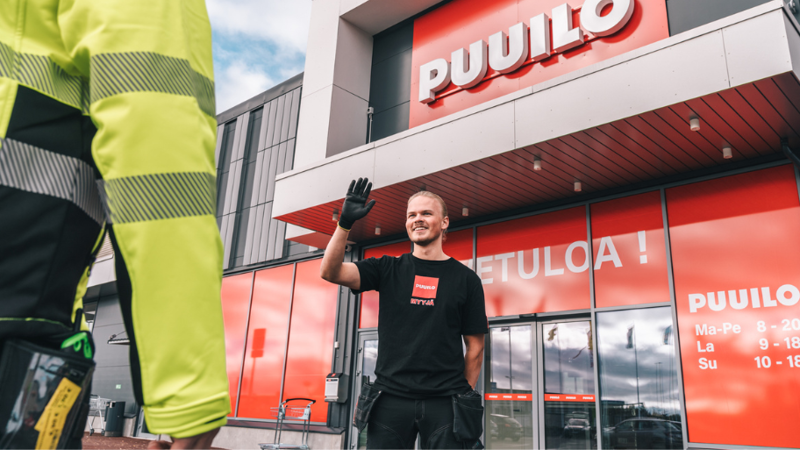
A targeted workplace survey supports business planning at Puuilo
At Puuilo, supervisor work is seen as directly linked to business success. When the findings that emerged during coaching sessions with the occupational health psychologist were compiled and presented to the management team, a shared understanding emerged that led to concrete changes in the structure of supervisor work. A targeted workplace survey provided information to support decision-making that would not have been obtained through traditional organization-level surveys. As a result of these changes, line management is now more flexible and, according to metrics, more sustainable.
“Sick leave is a last resort” – how occupational health services prevent absences
Most occupational health measures are never visible to employees or related to sick leave. This is a sign of success.
This is how technology is revolutionizing healthcare – “The cost-benefit ratio of occupational health is improving even further”
Artificial intelligence not only streamlines but also improves healthcare. It identifies risks and speeds up access to doctors, according to Terveystalo’s digital experts.

Digital trends in healthcare 2026: The ability to leverage artificial intelligence comprehensively will become a key success factor
The accelerating development of technology and artificial intelligence doesn’t just mean new innovations in healthcare; it forces us to rethink the entire operating logic of the sector, says Ilari Richardt, Head of Digital Services at Terveystalo.

Healthy Work Life Barometer 2026: Growing workload poses a challenge to the workplace; the solution lies in a sense of community
The Healthy Working Life Barometer 2026* reveals that 48% of business decision-makers consider the Finnish working life to be healthy. This is an encouraging turn for the better, as it represents a 5-percentage-point increase from the previous year. At the same time, the barometer reveals a new normal in the workplace: as many as 80% of respondents feel that the Finnish workplace is more fast-paced and stressful than ever before.
Healthy Work Life Barometer 2026: A positive trend in health, but a growing gap in views on humanity between top management and other employees
The Healthy Working Life Barometer 2026* reveals that 48% of business decision-makers consider the Finnish working life to be healthy. This marks an encouraging shift for the better, as it represents a 5-percentage-point increase from the previous year. Although the overall picture of workplace health has improved, experiences regarding management’s proactiveness and the humanity of everyday work vary, so polarization between roles is on the rise.